 Image 1 of 1
Hell on Earth
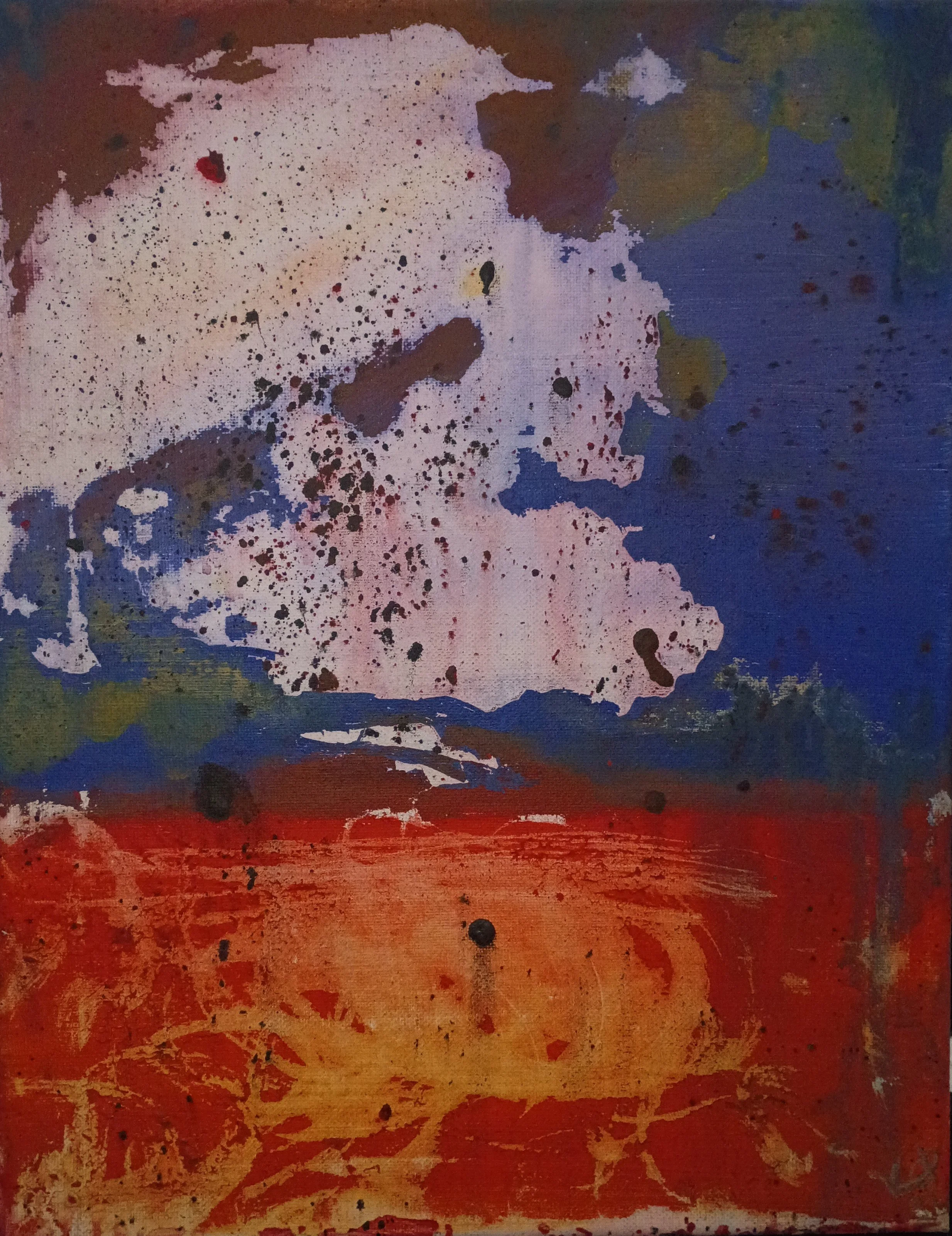
Acrylic on Canvas | 11 × 14 in
Where continents float above the quiet violence beneath the world.
In Hell on Earth, abstraction becomes cartography of the subconscious. What began as a spontaneous exercise in color and movement gradually revealed the suggestion of continents suspended above a volatile underworld. The upper portion of the canvas evokes the pale, fractured shapes of landmasses drifting across deep blue oceans, while the lower half erupts in molten reds and scorched oranges, resembling a sea of lava churning beneath the surface of the world.
This accidental emergence of geography recalls a long artistic tradition in which painters discovered landscapes within abstraction echoing the surreal tendency to allow forms to appear organically rather than be strictly imposed. Historically, humanity has imagined the Earth itself as layered between heavens and infernos: from the Greek concept of Tartarus beneath the mortal world, to medieval cosmologies depicting hell as a fiery abyss beneath the continents of the living.
The painting captures that ancient duality. Above lies the illusion of order, the calm blues of oceans and recognizable shapes of land. Below simmers chaos, rendered through aggressive textures and heated pigments that seem to glow from within the canvas itself. The scattered splatters across the central divide resemble falling ash or celestial debris, blurring the boundary between surface and underworld.
Vince’s second exploration into abstract technique reveals how play can lead to revelation. By relinquishing strict intention, the composition allowed an unexpected narrative to surface: a vision of the planet balanced precariously between stability and catastrophe. In this sense, Hell on Earth becomes more than a landscape, it is an allegory for the fragile equilibrium of existence itself, where beneath every ordered system lies the potential for eruption.
Hell on Earth
Acrylic on Canvas | 11 × 14 in
Where continents float above the quiet violence beneath the world.
In Hell on Earth, abstraction becomes cartography of the subconscious. What began as a spontaneous exercise in color and movement gradually revealed the suggestion of continents suspended above a volatile underworld. The upper portion of the canvas evokes the pale, fractured shapes of landmasses drifting across deep blue oceans, while the lower half erupts in molten reds and scorched oranges, resembling a sea of lava churning beneath the surface of the world.
This accidental emergence of geography recalls a long artistic tradition in which painters discovered landscapes within abstraction echoing the surreal tendency to allow forms to appear organically rather than be strictly imposed. Historically, humanity has imagined the Earth itself as layered between heavens and infernos: from the Greek concept of Tartarus beneath the mortal world, to medieval cosmologies depicting hell as a fiery abyss beneath the continents of the living.
The painting captures that ancient duality. Above lies the illusion of order, the calm blues of oceans and recognizable shapes of land. Below simmers chaos, rendered through aggressive textures and heated pigments that seem to glow from within the canvas itself. The scattered splatters across the central divide resemble falling ash or celestial debris, blurring the boundary between surface and underworld.
Vince’s second exploration into abstract technique reveals how play can lead to revelation. By relinquishing strict intention, the composition allowed an unexpected narrative to surface: a vision of the planet balanced precariously between stability and catastrophe. In this sense, Hell on Earth becomes more than a landscape, it is an allegory for the fragile equilibrium of existence itself, where beneath every ordered system lies the potential for eruption.