 Image 1 of 1
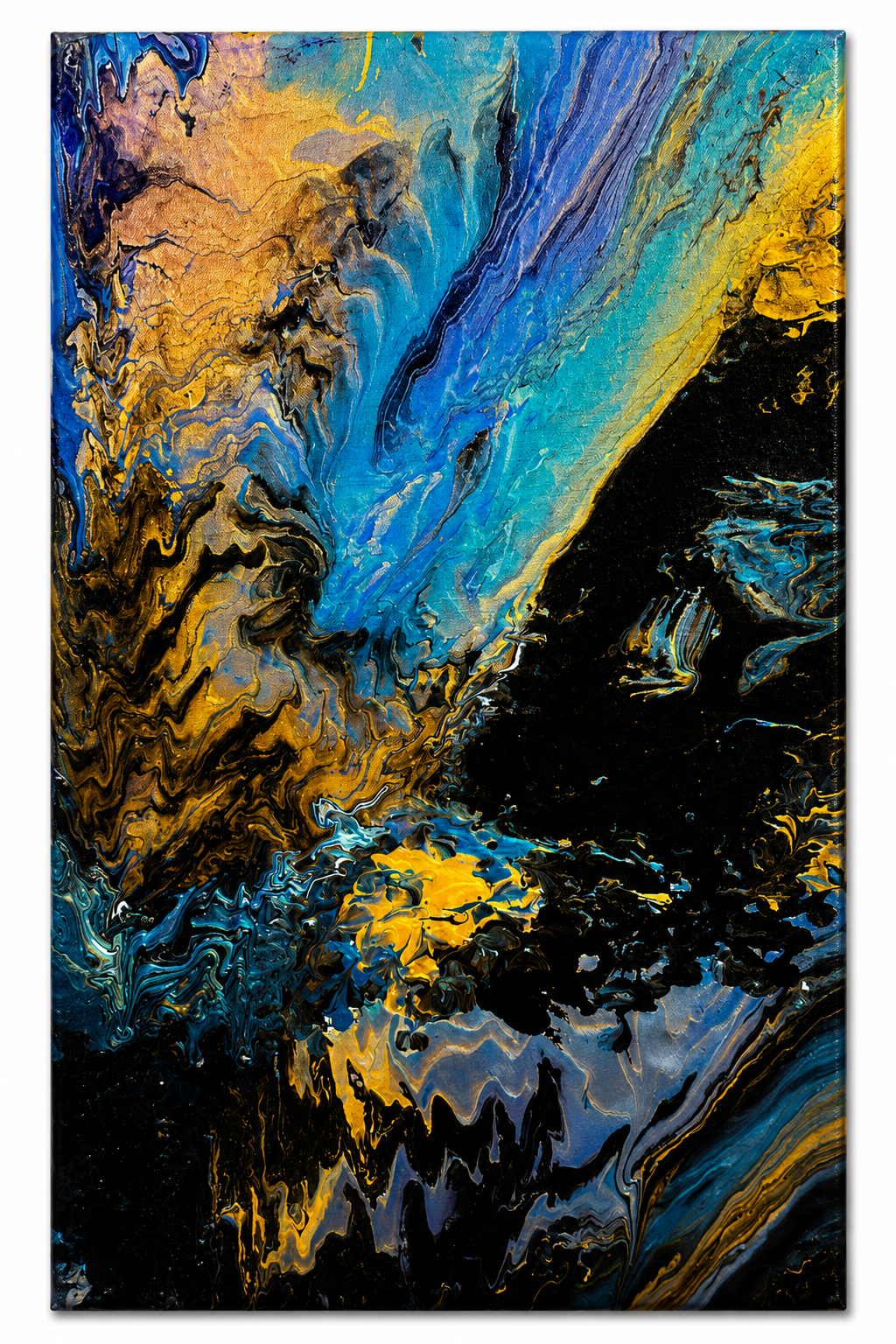
Rivers of Iridescence
Pouring | Oil on Canvas | 12×24 in
The same colors. A different story.
Rivers of Iridescence was created alongside Tears of Gold and Steel, using the exact same colors, medium, and pouring process. Yet where its companion became fluid and molten, this piece took on an entirely different character. The difference came down to the way the paint moved—the unpredictable interaction of gravity, physics, and the individual behavior of the colors as they met on the canvas.
The result is something almost mystifying, with sweeping bands and dark, fluid forms reminiscent of an oil spill catching light. Iridescent passages move across the surface in a way that seems to follow the viewer, creating the strange sensation that the painting is aware of the person standing in front of it. Rather than simply giving the eye somewhere to look, the work seems to look back.
There is also a quiet connection to the day it was created. While Tears of Gold and Steel seemed to embody the heat of the afternoon, Rivers of Iridescence feels like the brief relief of a passing breeze—the few seconds of refuge from an otherwise blistering day. Together, the two paintings became an unexpected study in how differently the same elements can behave when given the freedom to move on their own.
Of the two, Rivers of Iridescence remains Vincent’s proudest pouring to date. Its existence is a reminder that sometimes the smallest change in circumstance can create an entirely different outcome—and that two works can share the same beginning while becoming completely their own.
Rivers of Iridescence
Pouring | Oil on Canvas | 12×24 in
The same colors. A different story.
Rivers of Iridescence was created alongside Tears of Gold and Steel, using the exact same colors, medium, and pouring process. Yet where its companion became fluid and molten, this piece took on an entirely different character. The difference came down to the way the paint moved—the unpredictable interaction of gravity, physics, and the individual behavior of the colors as they met on the canvas.
The result is something almost mystifying, with sweeping bands and dark, fluid forms reminiscent of an oil spill catching light. Iridescent passages move across the surface in a way that seems to follow the viewer, creating the strange sensation that the painting is aware of the person standing in front of it. Rather than simply giving the eye somewhere to look, the work seems to look back.
There is also a quiet connection to the day it was created. While Tears of Gold and Steel seemed to embody the heat of the afternoon, Rivers of Iridescence feels like the brief relief of a passing breeze—the few seconds of refuge from an otherwise blistering day. Together, the two paintings became an unexpected study in how differently the same elements can behave when given the freedom to move on their own.
Of the two, Rivers of Iridescence remains Vincent’s proudest pouring to date. Its existence is a reminder that sometimes the smallest change in circumstance can create an entirely different outcome—and that two works can share the same beginning while becoming completely their own.